


If you’ve been told you need a root canal, the thought of multiple appointments, repeat injections and weeks of discomfort can be intimidating. But what if you could walk into a clinic and complete the entire procedure in one comfortable visit? That’s exactly what a single sitting root canal offers. This modern single sitting root canal treatment also known as a single sitting RCT or root canal in one sitting is transforming the way India approaches endodontic care.
Instead of returning for multiple sessions, patients now choose a single sitting root canal in India for its convenience, precision and faster relief. Thanks to advancements in digital dentistry, rotary endodontics and painless anesthesia, this technique allows the entire root canal procedure to be completed in just one appointment without compromising safety or success. In this detailed guide, you’ll learn how the procedure works, who it’s ideal for, the benefits it offers and the typical single sitting root canal cost in India today.
What is a Single Sitting Root Canal Treatment? (Complete Definition and When It’s Recommended)
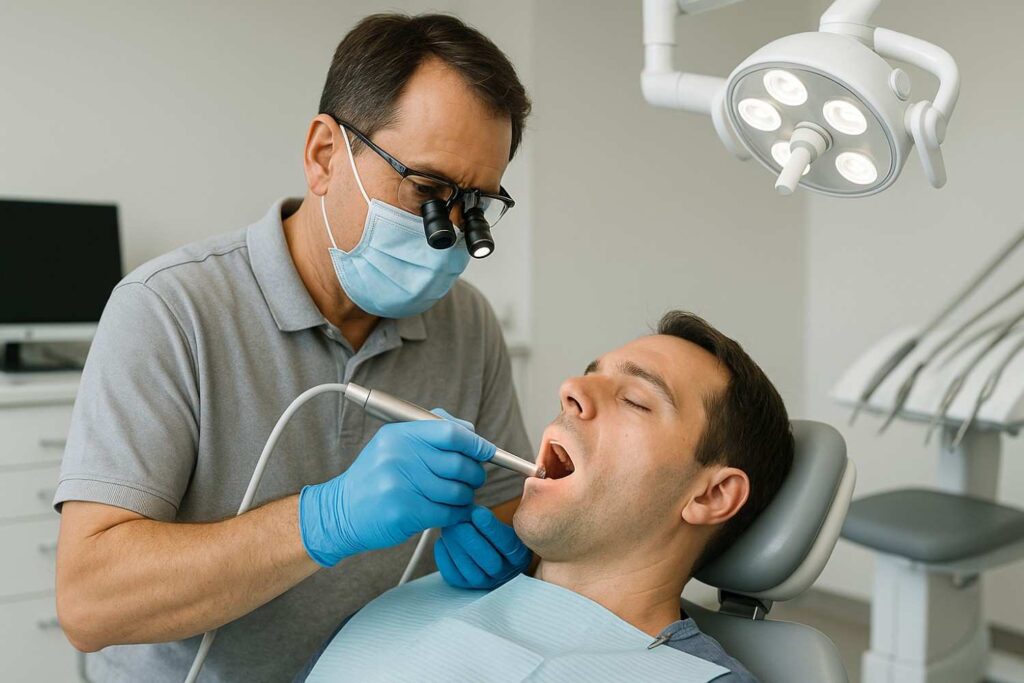
A single sitting root canal, also known as single appointment root canal or RCT in one sitting, is an endodontic procedure where the entire process of cleaning, disinfecting, filling, and sealing the infected tooth is completed in just one visit, typically within 30 to 60 minutes.
Unlike the traditional multi-visit approach that spans two to four appointments over several weeks, single sitting root canal treatment uses modern equipment and techniques to deliver faster, safer, and more comfortable outcomes.
Dentists recommend this approach when:
- The infection is limited to the pulp and hasn’t spread to surrounding bone
- There’s no significant swelling or abscess
- The tooth can be thoroughly cleaned and sealed in one session
However, in cases of severe infection, pus formation, or complex root anatomy, a multi-visit protocol may still be the safest option for complete healing.
Signs You Need a Single Sitting RCT (Symptoms Patients Should Not Ignore)
Early intervention increases the chances of qualifying for a same-day procedure. Common indicators include:
- Persistent, throbbing tooth pain, especially at night
- Lingering sensitivity to hot or cold
- Swelling in the gums or face near the affected tooth
- A deep cavity that has reached the nerve
- A cracked or fractured tooth causing internal damage
- Discoloration of the tooth, a sign of pulp necrosis
If you’re experiencing any of these symptoms, a timely consultation can determine whether you’re a candidate for a painless single sitting root canal.
Single Sitting Root Canal Procedure: Step-by-Step Process Explained
Single sitting RCT uses advanced tools that make the procedure quicker, more comfortable and more precise. Here is the detailed process:
Step 1: Diagnosis & Digital X-rays
The dentist begins with a thorough evaluation using digital X-rays or CBCT imaging. This helps identify the depth of decay, root anatomy and extent of infection, allowing a highly accurate treatment plan.
Step 2: Administration of Local Anesthesia
A local anesthetic numbs the area so the entire procedure is painless. Patients typically feel only slight pressure, not pain.
Step 3: Access Opening and Rotary Cleaning
Once the tooth is numb, an access opening is created. Using rotary endodontic systems, the dentist cleans and shapes the root canals swiftly and efficiently. Rotary files are more precise and faster than manual ones, making single sitting root canal treatment possible.
Step 4: Removal of Infected Pulp
The infected pulp tissue is carefully removed, eliminating the source of pain and inflammation.
Step 5: Thorough Disinfection
The canals are disinfected using chemical irrigants or laser-assisted disinfection. This step kills bacteria deep inside the canals and reduces the risk of reinfection.
Step 6: Filling and Sealing
The cleaned canals are filled with gutta-percha (a biocompatible material) and sealed tightly to prevent bacteria from re-entering.
Step 7: Crown Placement
To restore strength and chewing function, a crown is recommended. It may be provided on the same day or during a follow-up appointment depending on the tooth and crown type.
This structured, technology-supported sequence ensures that root canal treatment in one sitting is quick, comfortable and successful.
Key Benefits of Single Sitting Root Canal Treatment
Modern single sitting RCT offers several important advantages:
1. Faster Treatment
Everything is completed in one visit, saving time for working professionals, students, parents and senior citizens.
2. Less Pain and Reduced Anxiety
Advanced anesthetics, apex locators, rotary tools and efficient disinfection make the entire process smooth and comfortable.
3. Lower Risk of Reinfection
Since the tooth is sealed immediately, bacteria have no reopening opportunity between visits.
4. High Precision with Digital Dentistry
Digital imaging and modern endodontic instruments ensure cleaner canals and better long-term results.
5. Fewer Injections and Appointments
Only one session is needed, minimizing discomfort and reducing overall treatment time.
Single sitting root canal treatment blends accuracy, speed and patient comfort—making it a preferred endodontic treatment across India.
Single Sitting RCT vs Multi-Visit RCT: Detailed Comparison
A comparison helps understand why single sitting RCT is becoming popular:
FEATURES | SINGLE SITTING RCT | TRADITIONAL MULTI VISIT RCT |
| Appointments | 1 | 2–4 |
| Duration | 30–60 minutes | 1–3 weeks |
| Pain/Discomfort | Minimal with modern anesthetics | Moderate, with possible flare-ups between visits |
| Reinfection Risk | Low due to immediate sealing | Higher if temporary filling leaks |
| Cost | Often comparable or slightly higher due to technology | May seem lower initially but accumulates with repeat visits |
| Best For | Mild to moderate infection, no abscess | Severe infection, swelling, or complex anatomy |
While both methods aim to preserve your natural tooth, single visit endodontics offers a faster, more comfortable path for suitable cases.
Is a Single Sitting Root Canal Painful?
A frequent concern is whether a single sitting root canal is painful. The reality is that modern techniques have made the procedure remarkably comfortable.
With effective local anesthesia, most patients feel no pain during treatment. Mild sensitivity for 24 to 48 hours afterward is normal and easily managed. Severe or prolonged pain is uncommon and warrants immediate follow-up.
Innovations like rotary files, electronic apex locators, and dental operating microscopes minimize tissue trauma, making painless single sitting root canal not just possible but standard in well-equipped clinics.
Advanced Technology Used for Single Sitting RCT in India
The reliability of single sitting root canal in India depends on advanced tools:
- Rotary Endodontics: Flexible nickel-titanium instruments clean canals more efficiently than manual files.
- Digital X-rays & CBCT: Offer detailed 3D imaging for accurate diagnosis.
- Apex Locators: Precisely determine root length without guesswork.
- Laser Disinfection: Targets residual bacteria in microscopic spaces.
- Operating Microscopes: Enhance visibility for complex root systems.
These technologies collectively ensure that the single sitting root canal procedure is both swift and successful.
Single Sitting Root Canal Cost in India
The single sitting root canal cost in India generally ranges from ₹3,000 to ₹10,000, influenced by:
- Tooth location: Front teeth cost less than molars due to simpler anatomy.
- Clinic location: Urban centers may charge more, but high-quality care is accessible in areas like Panvel, Kamothe, and Navi Mumbai at reasonable rates.
- Technology used: Clinics employing rotary systems, lasers, or microscopes may have a modest premium but offer improved outcomes.
- Clinician expertise: Specialists may charge more, but their precision reduces the risk of complications.
While upfront cost is a consideration, investing in a skilled, tech-enabled provider often prevents costly retreatments down the line.
Aftercare Tips After a Single Sitting Root Canal (Do’s and Don’ts)
Proper post-treatment care ensures your restored tooth remains healthy:
- Avoid chewing on the treated side for 24 to 48 hours.
- Maintain gentle oral hygiene: brush as usual and rinse with warm salt water if needed.
- Take any prescribed medication, though many patients require none.
- Schedule a permanent crown within one to two weeks to prevent fracture.
- Contact your dentist immediately if you notice severe pain, swelling, or a broken filling.
With the right care, a root canal-treated tooth can function normally for decades.
Conclusion: Why Single Sitting Root Canal Treatment Is a Game-Changer for Patients
Single sitting root canal treatment represents a significant leap forward in endodontic treatment, merging efficiency, comfort, and clinical excellence. For patients across Panvel, Kamothe, and Navi Mumbai, it offers a practical, stress-free alternative to outdated multi-visit protocols.
If tooth pain is disrupting your life or a dentist has recommended a root canal, don’t delay or dread the process. Modern dentistry has redefined what’s possible.
Ready to save your natural tooth in just one comfortable visit?
Schedule a consultation today at Sasane Dental Clinic, your trusted destination for advanced, pain-free dental care in Panvel, Kamothe, and Navi Mumbai. Book your appointment now and take the first step toward lasting oral health.
FAQs on Single Sitting Root Canal Treatment
Q: Is a single sitting root canal safe for all patients?
A: No, it’s safe for most, but patients with severe infection, swelling, or complex root anatomy may still require multiple visits.
Q: How long does a single sitting root canal take to complete?
A: It typically takes 30 to 60 minutes and is completed in one appointment.
Q: Is a single sitting root canal more painful than a traditional root canal?
A: No, it’s usually less painful due to modern anesthesia and advanced, minimally invasive techniques.
Q: What is the difference between single sitting RCT and multi-visit RCT?
A: Single sitting RCT is done in one visit with immediate sealing, while multi-visit RCT spans 2-4 appointments with temporary fillings in between.
Q: Who is the best candidate for a single sitting root canal treatment?
A: Patients with mild to moderate pulp infection, no abscess or swelling, and straightforward tooth anatomy.
Q: Can a single sitting root canal be done if there is swelling or infection?
A: Generally not if there’s active swelling or pus, dentists often prefer multiple visits to control infection before sealing the tooth.
Q: How much does a single sitting root canal cost in India?
A: It typically ranges from ₹3,000 to ₹10,000, depending on the tooth, location, and clinic technology.
Q: Is a dental crown necessary after a single sitting root canal?
A: Yes, especially for back teeth, a crown protects the weakened tooth and is essential for long-term success.
Q: How soon can I eat after a single sitting RCT?
A: Wait until the anesthesia wears off (2–3 hours), and avoid chewing on the treated side for 24-48 hours.
Q: Does a single sitting root canal last as long as a traditional root canal?
A: Yes, when properly done and crowned, it lasts just as long, often for decades or a lifetime.
