

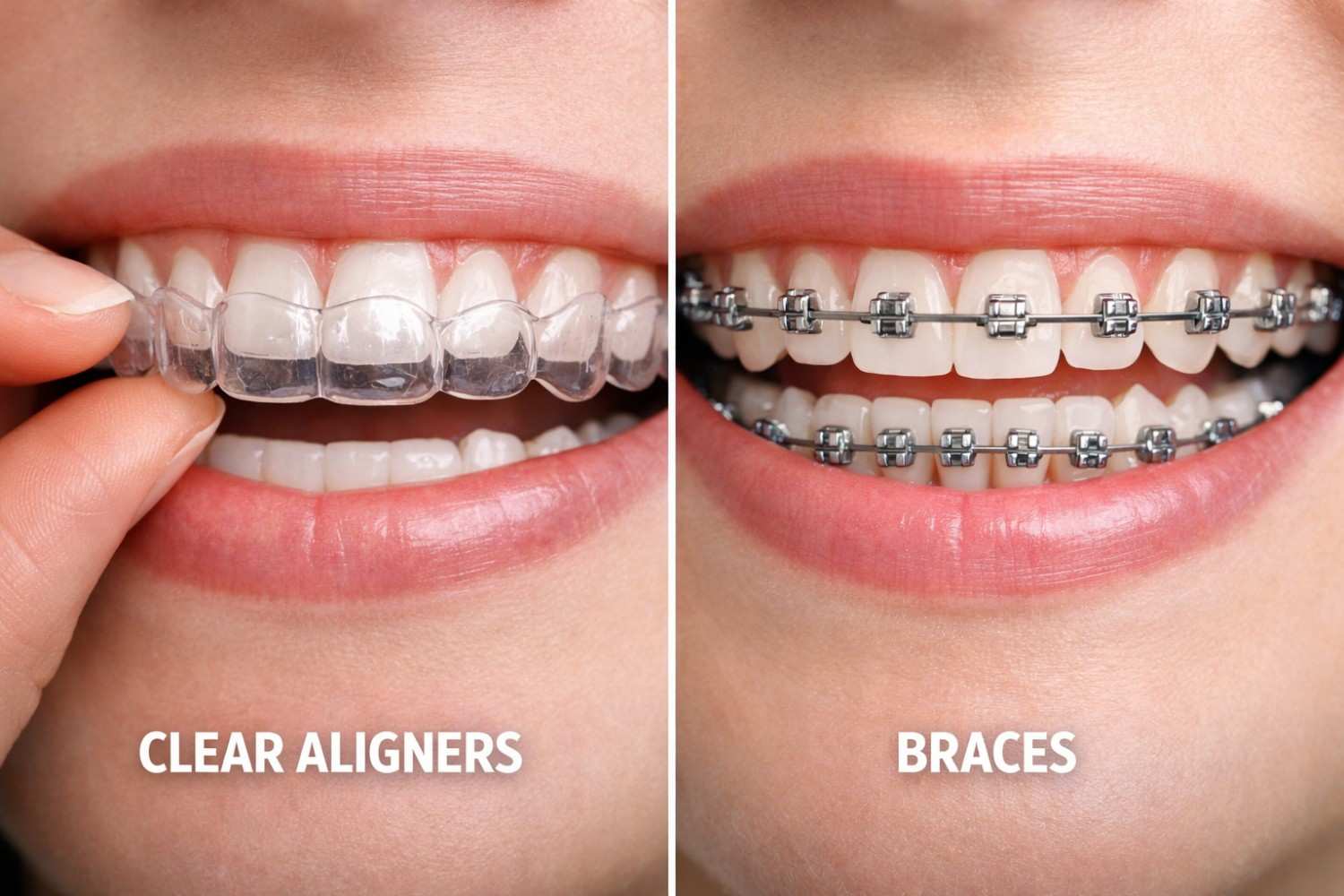
Deciding between clear aligners vs braces can feel overwhelming, especially when you want a straighter smile without compromising comfort, appearance, or lifestyle. Both options effectively correct misaligned teeth, but they differ significantly in design, treatment approach, and daily experience. Whether you’re a busy professional, a self-conscious teen, or an adult seeking discreet orthodontic care, understanding the key differences between clear aligners and traditional braces is essential to making the right choice. In this comprehensive guide, we’ll compare clear aligners vs metal braces across appearance, comfort, hygiene, cost, and more, so you can choose the option that truly fits your needs.
Clear aligners and braces are orthodontic treatments used to straighten teeth and correct bite issues. While braces use fixed brackets and wires, clear aligners rely on removable transparent trays. The right choice depends on case complexity, lifestyle, and patient compliance.
What Are Clear Aligners and How Do They Work?
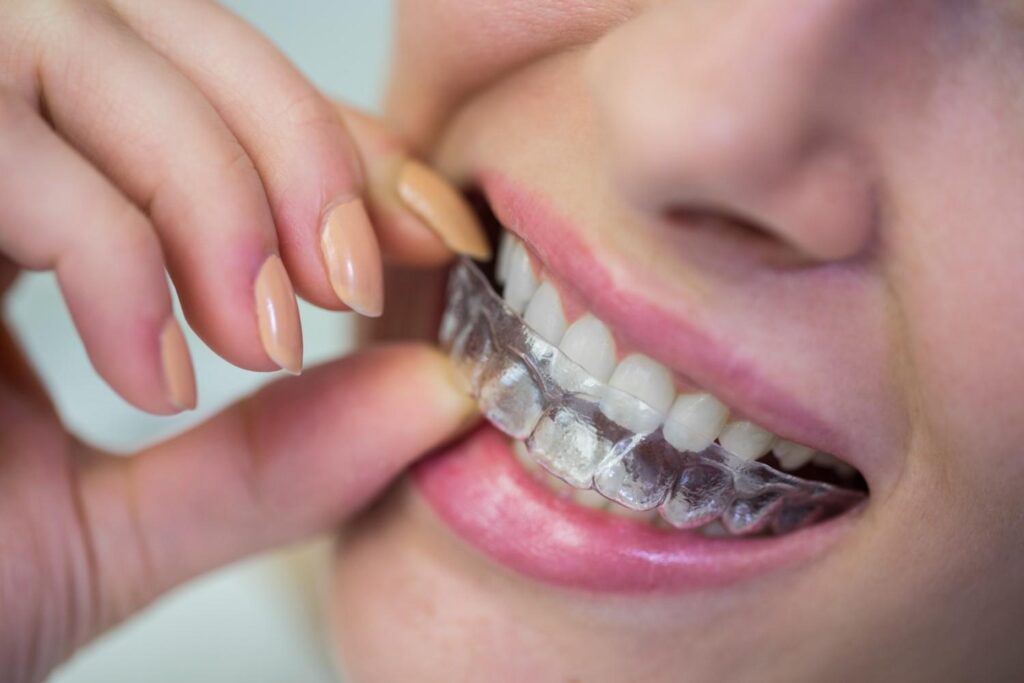
Clear aligners are custom-made, transparent plastic trays designed to gradually shift teeth into their ideal positions. Made from smooth, medical-grade plastic, they fit snugly over your teeth and are virtually invisible when worn. Brands like Invisalign popularized this method, but many dental clinics, including Sasane Dental Clinic, now offer personalized aligner systems tailored to individual treatment plans. Patients receive a series of aligners, typically changed every one to two weeks, that gently guide teeth through precise, controlled movements.
What Are Traditional Braces and How Do They Work?
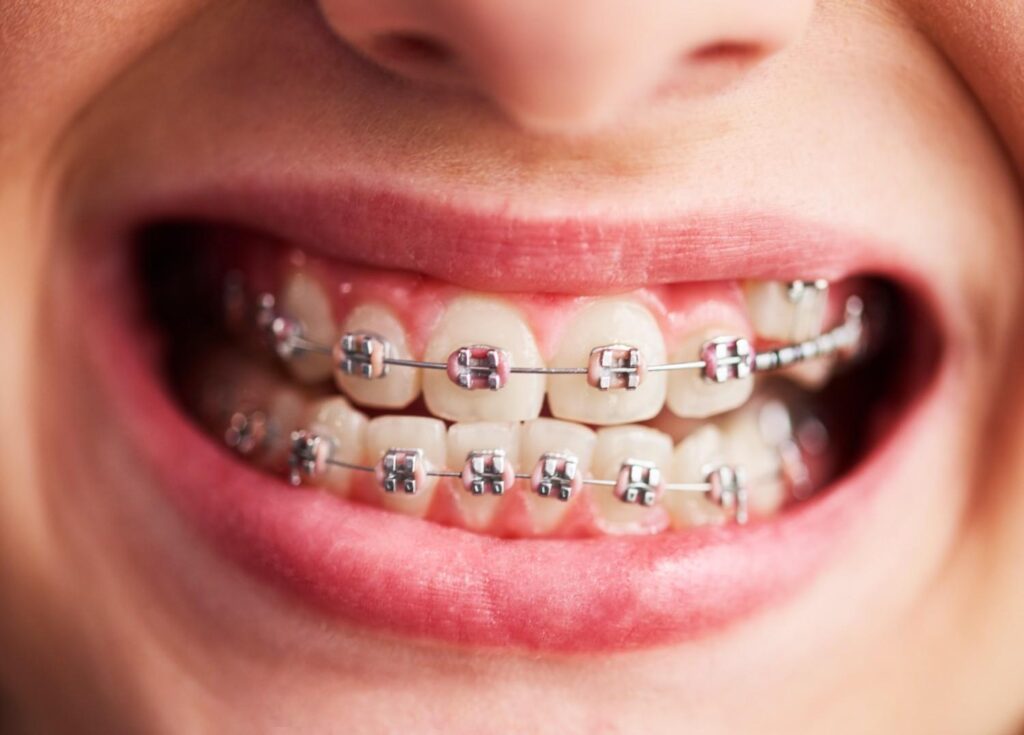
Traditional braces consist of metal brackets bonded to each tooth and connected by a wire that applies continuous pressure to move teeth over time. Modern braces may also come in ceramic (tooth-colored) or lingual (hidden behind teeth) varieties, but metal braces remain the most common and cost-effective option. Adjustments are made periodically by an orthodontist to ensure steady progress toward alignment goals.
Clear Aligners vs Braces: Side-by-Side Comparison
To help you weigh your options clearly, here’s a side-by-side comparison of clear aligners and traditional braces across key factors that matter most to patients:
| Feature | Clear Aligners | Traditional Braces |
| Appearance | Nearly invisible; transparent plastic trays | Noticeable metal brackets and wires |
| Removability | Removable for eating, brushing, and special occasions | Fixed; cannot be removed until treatment ends |
| Comfort | Smooth plastic; minimal irritation | May cause initial soreness or mouth sores |
| Oral Hygiene | Easier, remove to brush and floss normally | More challenging requires special tools |
| Diet Restrictions | None (remove before eating) | Avoid hard, sticky, or crunchy foods |
| Best For | Mild to moderate alignment issues | Complex cases (severe crowding, bite corrections) |
| Treatment Time | Typically 6 to 18 months (compliance-dependent) | Typically 18 to 36 months |
| Patient Compliance | Critical must wear 20 to 22 hours per day | Not required, appliances are fixed |
| Adjustments | Change aligners at home; fewer clinic visits | Regular in-clinic tightening appointments |
| Ideal For | Adults and image-conscious teens | Children, teens, and complex orthodontic cases |
Clear Aligners vs Braces: Key Differences Explained
Appearance: Clear Aligners vs Braces
Clear aligners are nearly invisible, making them ideal for adults and teens who prefer a discreet treatment. Traditional metal braces are obvious and can draw attention, though ceramic braces offer a less noticeable alternative.
Removability and Daily Convenience
Aligners are removable you take them out to eat, brush, and floss. Braces are fixed and stay on your teeth for the entire treatment duration. This removability offers flexibility but requires strong patient discipline.
Comfort and Irritation Levels
Clear aligners are made of smooth plastic, reducing irritation to cheeks and gums. Braces can cause initial soreness and occasional mouth sores due to brackets and wires, though discomfort usually subsides after the adjustment period.
Oral Hygiene and Cleaning Ease
Maintaining oral hygiene is easier with aligners since they’re removed during brushing and flossing. With braces, food particles can get trapped around brackets and wires, requiring special tools like interdental brushes and floss threaders to clean effectively.
Diet Restrictions with Aligners vs Braces
Aligners allow you to eat whatever you like, as long as you remove them before meals. Braces require dietary restrictions: hard, sticky, or crunchy foods (like popcorn, caramel, or nuts) can damage brackets or wires.
Effectiveness for Mild vs Complex Cases
Braces are highly effective for complex cases, including severe crowding, large gaps, or significant bite issues like overbites or crossbites. Clear aligners work well for mild to moderate alignment problems but may not be suitable for very complex orthodontic needs.
Treatment Duration: Aligners vs Braces
Treatment duration varies by individual, but braces often work faster for complex movements. Clear aligners typically take 6 to 18 months for moderate cases, while braces may require 18 to 36 months. However, aligner treatment can be delayed if not worn consistently.
Patient Compliance Requirements
Success with clear aligners depends entirely on patient compliance, they must be worn 20 to 22 hours per day. Braces require no compliance beyond oral hygiene since they’re permanently attached.
Cost Difference Between Clear Aligners and Braces
Cost is a major factor in the clear aligners vs braces decision. Generally, traditional metal braces are more affordable, while clear aligners tend to be pricier due to customization and technology. However, prices vary based on case complexity and location.
Clear Aligners vs Braces Cost in India
Understanding the investment involved is key to making an informed decision. Below is a general cost comparison of orthodontic treatments available in India:
|
Treatment Type |
Approximate Cost Range (INR) |
Notes |
| Metal Braces | ₹30,000 to ₹70,000 | Most affordable; highly effective for all case types |
| Ceramic Braces | ₹50,000 to ₹1,00,000 | Less visible than metal; slightly more fragile |
| Clear Aligners | ₹1,00,000 to ₹2,50,000+ | Cost varies by brand, case complexity, and treatment duration |
| Lingual Braces | ₹1,50,000 to ₹3,00,000 | Hidden behind teeth; custom-fit; higher cost and longer adjustment period |
Note: Costs may vary based on case complexity, treatment duration, and the orthodontist’s expertise.
Clear Aligners or Braces: Which Is Right for You?
Consider clear aligners if you:
- Prefer a discreet appearance
- Have mild to moderate alignment issues
- Are disciplined about wearing them as directed
- Want fewer dietary restrictions and easier cleaning
Choose traditional braces if you:
- Have complex orthodontic needs
- Want the most cost-effective long-term solution
- Prefer a hands-off approach (no risk of non-compliance)
- Are treating a child or teen who may forget to wear aligners
When to Consult an Orthodontist for Aligners or Braces
The best way to determine whether clear aligners or braces are right for you is through a professional evaluation. At Sasane Dental Clinic, our orthodontic experts assess your bite, tooth alignment, oral health, and lifestyle to recommend the most effective and suitable treatment. A 3D scan, X-rays, and a detailed consultation help ensure your path to a straighter smile is both safe and successful.
Final Verdict: Clear Aligners vs Braces
Choosing between clear aligners vs braces is a personal decision that depends on your goals, lifestyle, and dental needs. Both options can deliver beautiful, lasting results when guided by experienced professionals. If you’re ready to explore which method aligns best with your smile goals, Sasane Dental Clinic is here to help.
Book a consultation today and take the first step toward a healthier, more confident smile with personalized orthodontic care you can trust.
FAQs: Clear Aligners vs Braces
Q: What is the main difference between clear aligners and braces?
A: The main difference is that clear aligners are removable, nearly invisible plastic trays, while braces are fixed appliances with brackets and wires bonded to the teeth.
Q: Are clear aligners as effective as braces?
A: Clear aligners are highly effective for mild to moderate orthodontic issues but may not match braces for complex tooth movements or severe bite corrections.
Q: Which is better: clear aligners or braces?
A: Neither is universally better: clear aligners offer discretion and convenience for suitable cases, while braces provide greater control for complex alignment issues.
Q: Are clear aligners suitable for everyone?
A: No, clear aligners are not suitable for everyone; they work best for mild to moderate crowding or spacing and require high patient compliance.
Q: Do clear aligners work faster than braces?
A: Not necessarily while some aligner cases finish in less time, braces often move teeth more efficiently in complex situations; treatment speed depends on the individual case and compliance.
Q: Which option is more comfortable: aligners or braces?
A: Clear aligners are generally more comfortable due to their smooth plastic design, while braces can cause initial irritation from brackets and wires.
Q: What is the cost difference between clear aligners and braces?
A: Clear aligners typically cost more (₹1,00,000 to ₹2,50,000+) than traditional metal braces (₹30,000 to ₹70,000) in India, though prices vary by clinic and case complexity.
Q: Are clear aligners better than braces for adults?
A: Clear aligners are often preferred by adults for their discreet appearance and removability, making them a practical and aesthetic choice for motivated patients with suitable dental needs.
Q: Can teenagers use clear aligners instead of braces?
A: Yes, many teenagers can use clear aligners if they have the right orthodontic condition and are disciplined enough to wear them 20 to 22 hours a day as prescribed.
Q: How do I choose between clear aligners and braces?
A: Choose based on your orthodontic needs, lifestyle, aesthetic preferences, and ability to comply with treatment, consult an orthodontist at Sasane Dental Clinic for a personalized recommendation.
Q: Are clear aligners better than braces?
A: Clear aligners aren’t inherently better than braces; they’re ideal for mild to moderate cases and lifestyle convenience, while braces excel in treating complex alignment issues; the right choice depends on your individual needs.



It’s helpful to see a breakdown of the differences in treatment approach between clear aligners and braces, as the article explains.