
If you’ve ever hesitated to smile fully because of yellowed, stained, or dull-looking teeth, you’re not alone. A brighter, whiter smile is one of the most impactful yet non-invasive ways to enhance your appearance and self-confidence. The teeth whitening procedure has become a cornerstone of modern cosmetic dentistry not just for celebrities, but for everyday individuals seeking a fresh, youthful look. Whether discoloration stems from years of coffee drinking, smoking, aging, or medication side effects, professional and at-home whitening solutions offer effective pathways to a radiant smile.
In this comprehensive guide, we unpack every critical aspect of the teeth whitening process: how it works at a molecular level, the exact steps involved in both clinical and home-based approaches, realistic cost expectations in India, potential risks and how to mitigate them, expected outcomes, and long-term maintenance.
What Is a Teeth Whitening Procedure? (Definition & Purpose)
The teeth whitening procedure is a cosmetic dental treatment that uses peroxide-based bleaching agents to remove stains and lighten the natural colour of teeth, either through in-clinic professional treatment or dentist-supervised at-home methods.
How Does Teeth Whitening Work?
At its core, the teeth whitening procedure relies on bleaching agents primarily hydrogen peroxide or carbamide peroxide to lighten tooth color. These compounds penetrate the enamel and dentin layers, where they generate free radicals that break down large, dark-colored molecules known as chromogens. Once these pigment molecules are fragmented into smaller, colorless components, teeth reflect more light and appear visibly whiter.
It’s important to note that whitening only affects natural tooth structure. Dental restorations such as crowns, veneers, fillings, or bridges will not change color, which may lead to uneven results if not addressed beforehand.
Types of Teeth Whitening Procedures: Professional vs At-Home Options
There are two main approaches to teeth whitening: professional in-clinic treatments and supervised or over-the-counter at-home methods. Both use peroxide-based gels but differ significantly in concentration, application technique, and speed of results.
Professional Teeth Whitening Procedure (In-Clinic / Laser Whitening)
Also referred to as dentist teeth whitening procedure, laser teeth whitening, or in-clinic teeth whitening procedure, this method delivers the fastest and most dramatic results under direct dental supervision.
Step-by-Step Professional Teeth Whitening Procedure
- Initial Consultation & Oral Health Screening
The dentist evaluates for cavities, gum disease, enamel erosion, or existing restorations. If tartar or plaque is present, scaling before teeth whitening is mandatory otherwise, the gel cannot contact clean enamel, reducing efficacy and increasing irritation risk. - Preparation & Isolation
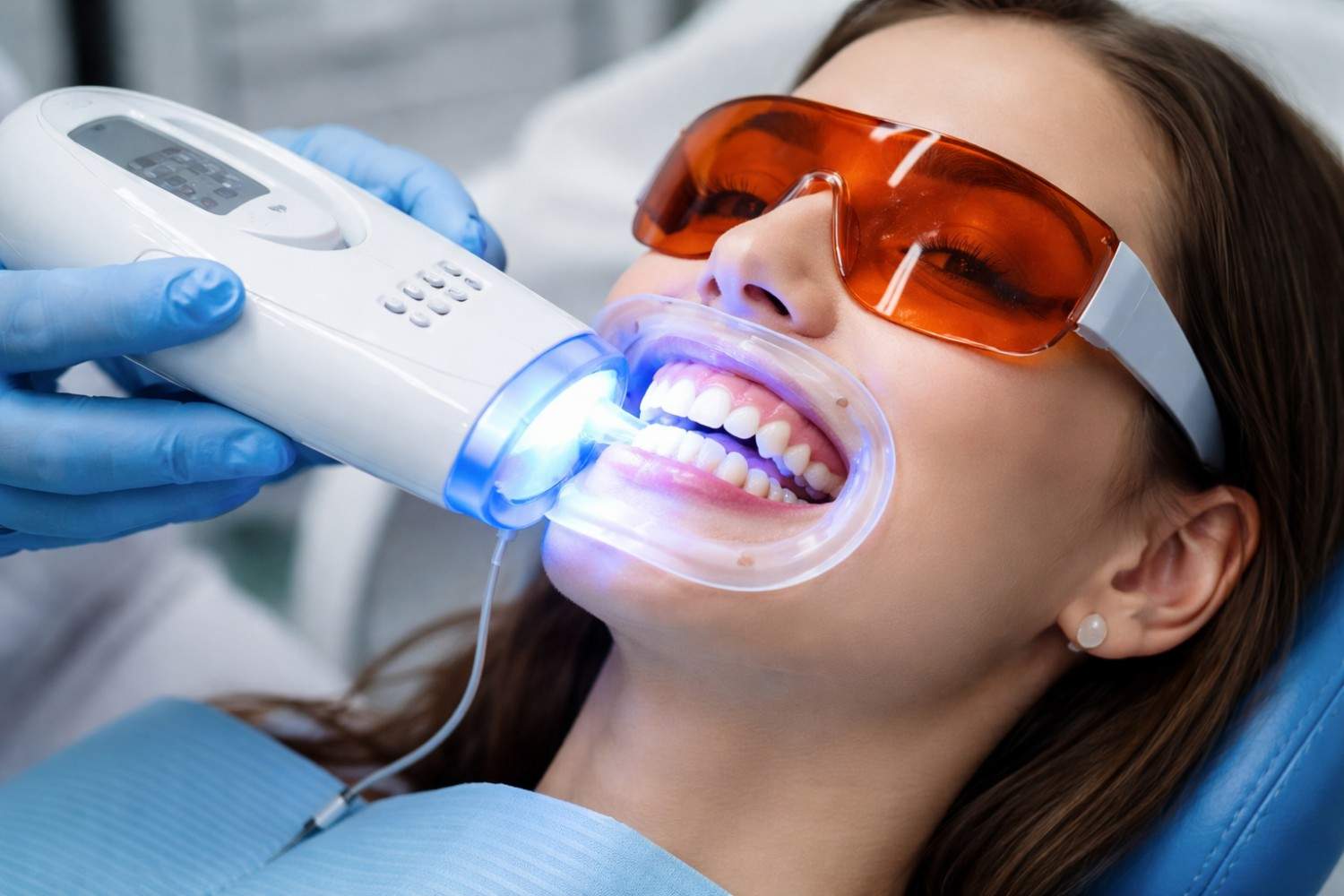
- Lips and cheeks are retracted using a cheek retractor.
- A light-cured resin or liquid dam is applied to gums to create a protective barrier.
- The patient wears protective eyewear to shield against the activation light.
- Teeth Drying
A gentle air syringe dries the tooth surfaces to ensure optimal adhesion of the whitening gel. - Gel Application
A high-concentration hydrogen peroxide gel (typically 35–40%) is painted onto the front surfaces of the teeth. - Light Activation (Optional but Common)
A blue-spectrum LED or laser device is positioned over the teeth for 10–15 minutes. While some debate exists over the necessity of light activation, clinical evidence shows it accelerates peroxide decomposition, enhancing stain breakdown without raising pulp temperature to harmful levels. - Repeat Cycles
The gel is reapplied 2–3 more times, with each cycle lasting 15 minutes. Total chair time: 45–60 minutes. - Post-Treatment Neutralization
Residual gel is suctioned away. A fluoride-rich desensitizing varnish or gel is applied to seal dentinal tubules and reduce post-operative sensitivity.
Ideal For:
- Patients with moderate to severe extrinsic staining
- Those preparing for weddings, interviews, or photo shoots
- Individuals who prefer immediate, supervised results
At-Home Teeth Whitening Options
At-home whitening includes dentist-supervised custom kits and over-the-counter (OTC) products like strips, gels, or toothpastes.
Custom Tray Whitening (Dentist-Supervised)
- Impressions are taken during a clinic visit to fabricate flexible, form-fitting trays.
- The dentist provides carbamide peroxide gel (typically 10–16%, equivalent to ~3.5–5.6% hydrogen peroxide).
- Worn for 30–60 minutes daily over 7–14 days.
- Offers controlled dosage, even coverage, and reduced gum exposure.
OTC Whitening Strips & Gels
- Pre-coated with low-dose peroxide (3–10% hydrogen peroxide equivalent).
- Applied twice daily for 10–14 days.
- Less precise; may cause uneven whitening or gum irritation due to poor fit.
Whitening Toothpastes
- Contain mild abrasives (e.g., silica) and low peroxide or polyphosphates.
- Only remove surface (extrinsic) stains no true bleaching occurs.
- Best used for maintenance after professional whitening.
- Individuals with intrinsic stains: Tetracycline-induced gray bands, fluorosis mottling, or genetic discoloration respond poorly to standard whitening.
Always undergo a dental evaluation before starting any teeth whitening treatment.
Teeth Whitening Results: How Long Does Teeth Whitening Last?
One of the most common questions is, “How long does teeth whitening last?” On average, results persist for 6 to 12 months, depending on lifestyle and oral hygiene.
Factors that shorten longevity:
- Regular consumption of coffee, tea, red wine, cola, or dark sauces
- Smoking or tobacco use
- Poor brushing/flossing habits
- Acidic foods that erode enamel and expose darker dentin
To extend your teeth whitening results duration:
- Avoid staining foods/drinks for at least 24–48 hours post-treatment
- Use a straw for colored beverages
- Brush twice daily with a whitening or fluoride toothpaste
- Schedule professional cleanings every 6 months
While permanent teeth whitening isn’t possible, touch-up sessions (either in-clinic or at-home) can easily restore brightness.
Professional vs Home Teeth Whitening: Which Is Better for You?
Choosing between laser teeth whitening vs chemical whitening or professional vs home teeth whitening depends on your goals, budget, and sensitivity level.
| Factor | Professional In-Clinic | At-Home Kits |
| Speed of Results | Immediate (same-day) | Gradual (5–14 days) |
| Whitening Strength | High (35–40% H₂O₂) | Low–moderate (10–16% carbamide peroxide) |
| Customization | Full dental oversight, gum protection | Limited (unless custom trays are made) |
| Cost | Higher | Lower |
| Sensitivity Risk | Managed by dentist | Self-managed; higher risk if misused |
| Ideal For | Special events, deep stains, fast results | Maintenance, mild discoloration, convenience |
For best outcomes, many dentists recommend an in-clinic session followed by at-home maintenance a hybrid approach that maximizes both impact and longevity.
Who Is an Ideal Candidate for Teeth Whitening?
The teeth whitening procedure is suitable for adults with:
- Yellow, brown, or mild black extrinsic stains from diet or smoking
- Age-related dullness due to enamel thinning
- Discoloration from certain medications (though tetracycline stains may be resistant)
It’s especially beneficial for professionals, public speakers, soon-to-be-weds, or anyone seeking a confident, radiant smile.
However, it’s not recommended for those with:
- Untreated cavities or gum disease
- Cracked or worn enamel
- Existing dental work on front teeth (may cause mismatched shades)
A thorough consultation ensures you’re a good candidate.
Teeth Whitening Cost in India (Clinic vs At-Home Pricing)
Cost is a major factor when choosing between in-office and at-home treatments. Below is a keyword-rich comparison of typical teeth whitening treatment cost ranges in India:
| Treatment Type | Average Cost (INR) | Duration | Best For |
| In-clinic professional teeth whitening | ₹8,000 – ₹25,000 | 45–60 minutes | Immediate results, severe staining |
| Laser teeth whitening | ₹12,000 – ₹30,000 | 1 session | Fast, supervised, high-efficacy |
| Custom at-home kit (dentist-provided) | ₹5,000 – ₹12,000 | 7–14 days | Gradual whitening, sensitive teeth |
| Over-the-counter strips/gels | ₹800 – ₹3,500 | 10–14 days | Mild stains, budget-conscious users |
Note: Prices vary based on city, clinic reputation, and extent of discoloration. Always confirm whether scaling before teeth whitening is included, as untreated plaque can reduce effectiveness.
Is Teeth Whitening Safe? Side Effects, Risks & Who Should Avoid It
“Is teeth whitening safe?” is a top concern and rightly so. When performed under professional guidance and within recommended concentrations, it is safe and non-destructive.
Common Side Effects:
- Tooth Sensitivity: Occurs in ~50–75% of patients, usually mild and transient (resolves in 24–48 hours). Caused by peroxide penetrating enamel and stimulating nerve endings via open dentinal tubules.
- Gum Irritation: Results from gel contact with soft tissues. Minimized by proper isolation in-clinic or careful application at home.
- Uneven Whitening: May occur if trays don’t fit well or if restorations are present.
Does Teeth Whitening Damage Enamel or Teeth?
No, not when done correctly. Studies confirm that peroxide-based whitening within standard concentrations (≤35% H₂O₂ in-office, ≤16% carbamide at home) does not alter enamel hardness, morphology, or mineral content. However, excessive frequency or unregulated products can lead to surface roughness or increased porosity over time.
Who Should Not Get Teeth Whitening?
- Children under 16: Pulp chambers are larger, increasing sensitivity risk.
- Pregnant or breastfeeding women: Though no proven harm, caution is advised due to lack of long-term studies.
- Patients with untreated dental issues: Active decay, gum disease, or cracked teeth can allow peroxide to reach the pulp, causing pain or inflammation.
Teeth Whitening Aftercare: Do’s & Don’ts for Long-Lasting Results
After your teeth whitening treatment, follow these guidelines:
- Avoid staining foods and drinks for 48 hours
- Use desensitizing toothpaste if sensitivity occurs
- Maintain excellent oral hygiene: brush, floss, and rinse daily
- Attend regular dental check-ups every six months
- Consider annual touch-ups to sustain results
Some clinics also provide post-whitening kits with fluoride gel and shade guides to monitor changes.
Professional Teeth Whitening in Navi Mumbai at Sasane Dental Clinic
If you’re looking for a trusted provider of cosmetic dentistry in Navi Mumbai, Sasane Dental Clinic offers advanced, pain-free teeth whitening procedures using internationally certified, enamel-safe whitening systems. Our experienced dentists begin with a comprehensive evaluation to determine the best approach for your unique needs, whether it’s an in-clinic session for instant transformation or a customized at-home plan for gradual brightening. With strict adherence to safety protocols, gum protection measures, and post-treatment care, we ensure stunning, long-lasting results without compromising your dental health.
Book a consultation today to discover how a professional teeth whitening procedure can give you the confident, luminous smile you deserve.
FAQs on Teeth Whitening Procedure
How does the teeth whitening procedure work?
The teeth whitening procedure works by applying hydrogen peroxide or carbamide peroxide gel to the teeth, which penetrates the enamel and dentin to break down stain molecules through oxidation, resulting in a visibly whiter smile.
Is the teeth whitening procedure safe for enamel?
Yes, when performed using approved concentrations and proper technique under professional supervision, the teeth whitening procedure is safe and does not damage or weaken tooth enamel.
How long does a professional teeth whitening procedure take?
A professional teeth whitening procedure typically takes 45 to 60 minutes in a single dental office visit.
Is teeth whitening painful or uncomfortable?
Teeth whitening is generally not painful, though some patients may experience temporary tooth sensitivity or mild gum discomfort, which usually subsides within 24–48 hours.
What are the common side effects of teeth whitening?
The most common side effects of teeth whitening are temporary tooth sensitivity and minor gum irritation, both of which are short-lived and manageable.
How long do teeth whitening results last?
Teeth whitening results typically last 6 to 12 months, depending on oral hygiene, diet, and lifestyle habits such as smoking or consuming staining foods and beverages.
Do I need scaling or cleaning before teeth whitening?
Yes, professional scaling or cleaning before teeth whitening is recommended to remove plaque, tartar, and surface debris, ensuring even whitening and reducing the risk of sensitivity or gum irritation.
Can teeth whitening damage teeth or gums?
When performed correctly by a qualified dentist, teeth whitening does not damage teeth or gums; however, misuse of over-the-counter products or treatment with untreated dental issues can lead to complications.
Who should avoid the teeth whitening procedure?
Individuals under 16, pregnant or breastfeeding women, and those with active tooth decay, gum disease, cracked teeth, or certain types of intrinsic discoloration (like tetracycline staining) should avoid the teeth whitening procedure.
What should I eat or avoid after the teeth whitening procedure?
After the teeth whitening procedure, avoid dark-colored foods and drinks (such as coffee, tea, red wine, cola, berries, and soy sauce) and acidic items for at least 48 hours; instead, consume light-colored “white diet” foods like milk, rice, chicken, bananas, and plain pasta to protect your results.